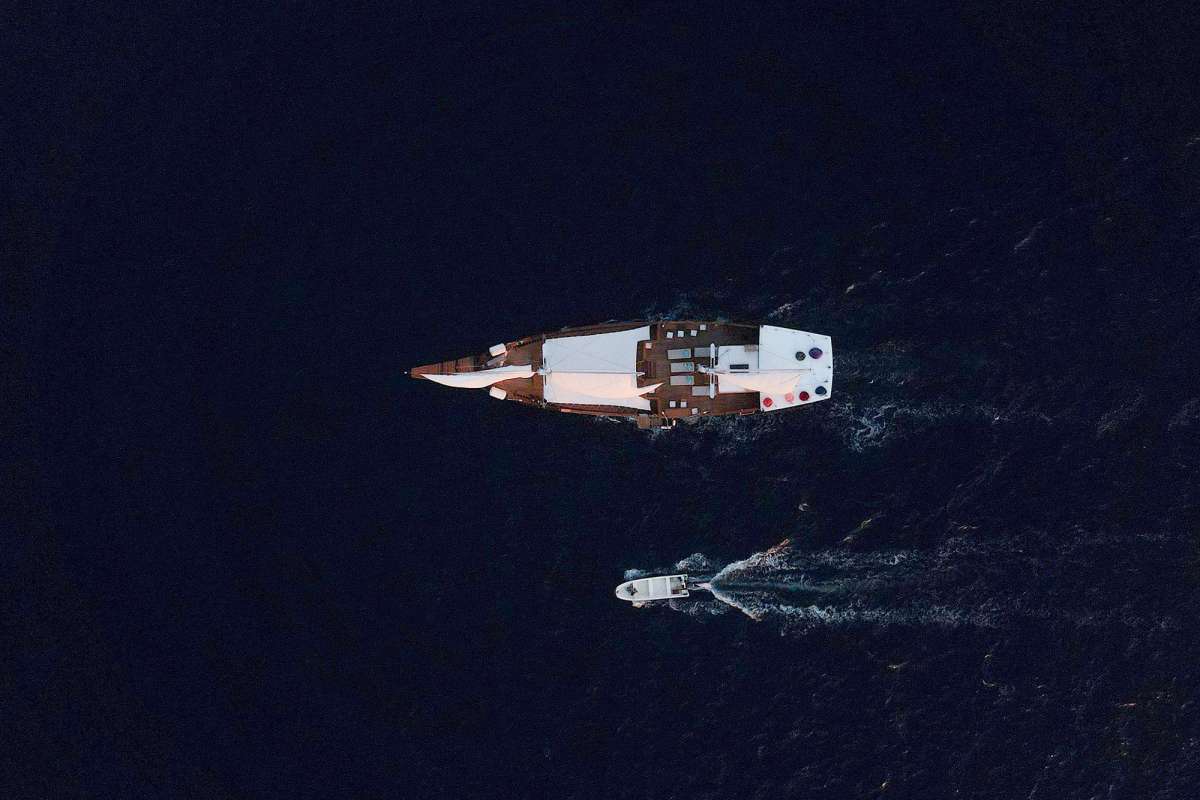
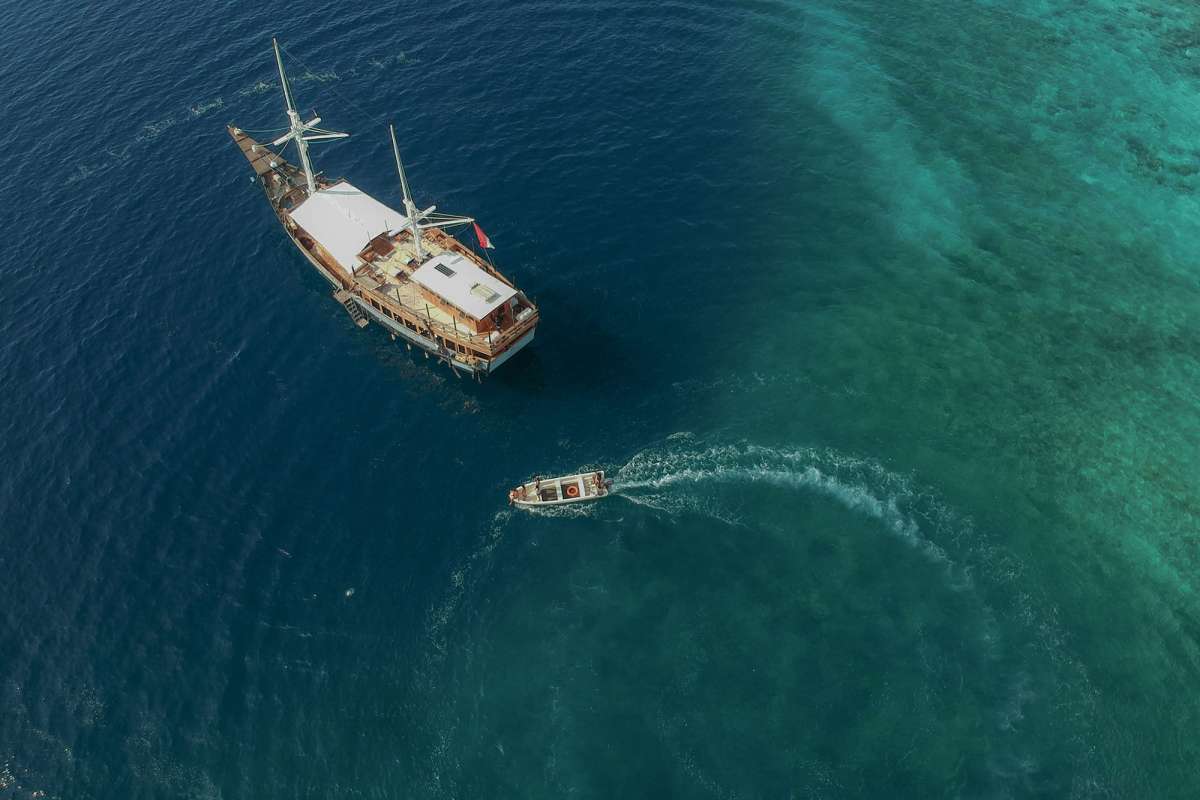
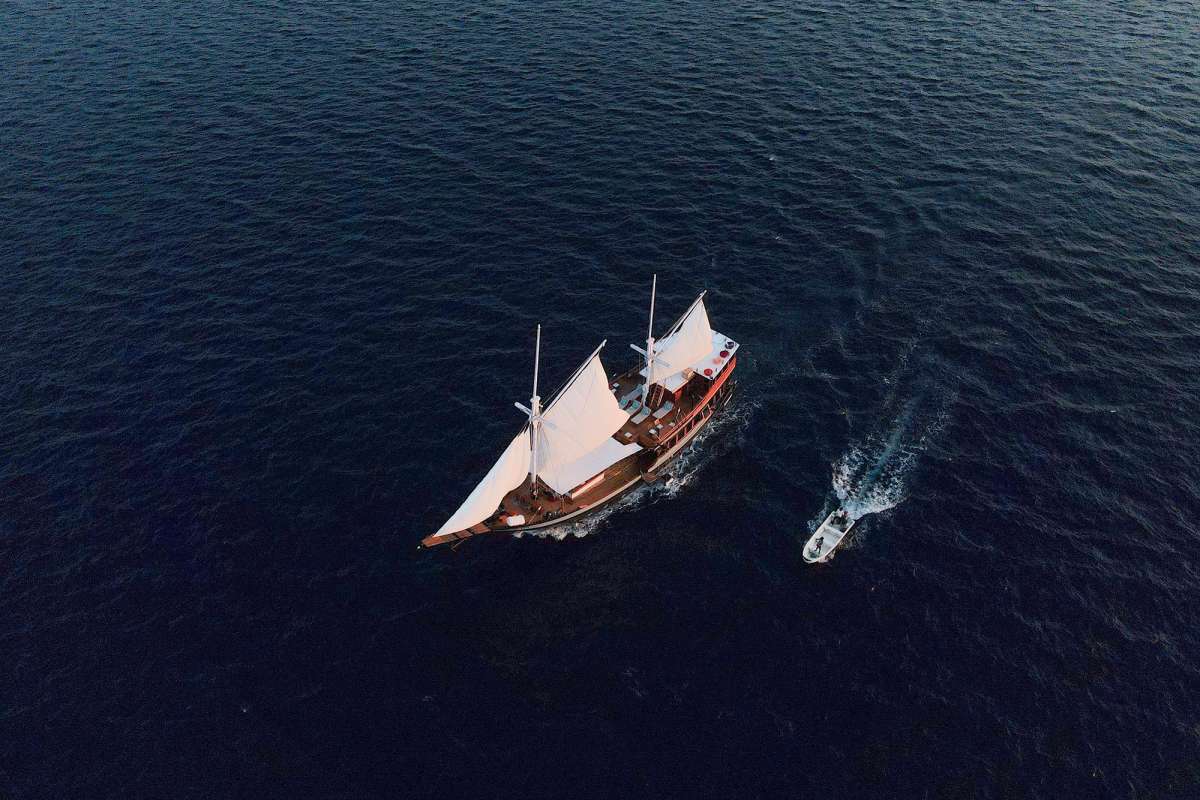
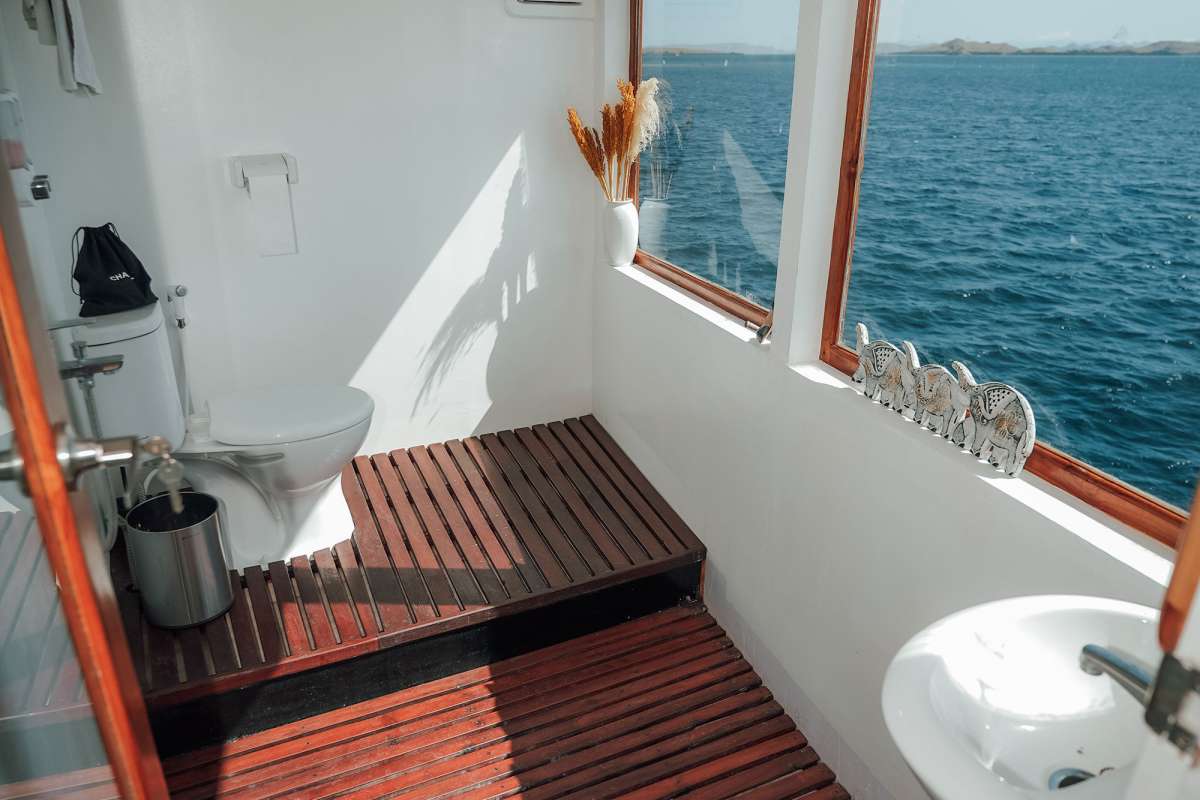
Queenesia II is a 32-metre ironwood phinisi with seven ensuite cabins, a standard published operating capacity of 14 and physical bedding for up to 16 when authorised. Two compressors, 12-litre aluminium tanks, small dive groups and wide-ranging schedules support expeditions through Raja Ampat, Banda Sea, Derawan, North Sulawesi and Komodo.
| Date | 22/08/26 to 30/08/26 |
|---|---|
| Duration | 8 nights |
| Boat | Queenesia II |
| Destination | Derawan Islands |
| Departure | Berau |
| Arrival | Berau |
Description
Boat
Queenesia II is the larger, expedition-oriented member of Queenesia Fleet. Built in 2016 as a traditional Buginese phinisi schooner and reported refurbished in 2022, the vessel uses ironwood construction and measures 32 metres long by 7.5 metres wide. Her published cruising speed is 7–8 knots. Unlike Queenesia 1, which remains focused on Komodo, Queenesia II follows seasonal and crossing itineraries through Raja Ampat, Misool, the Banda Sea, Ambon, Derawan, North Sulawesi and Komodo.
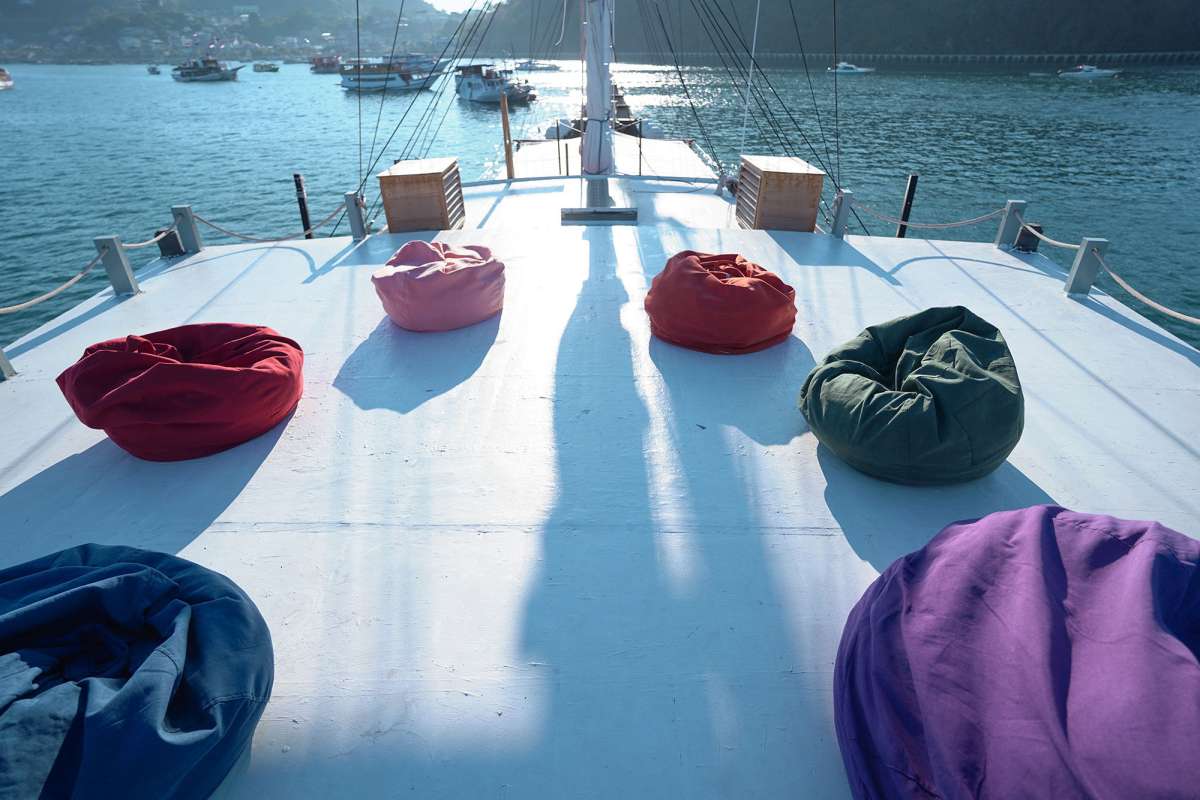
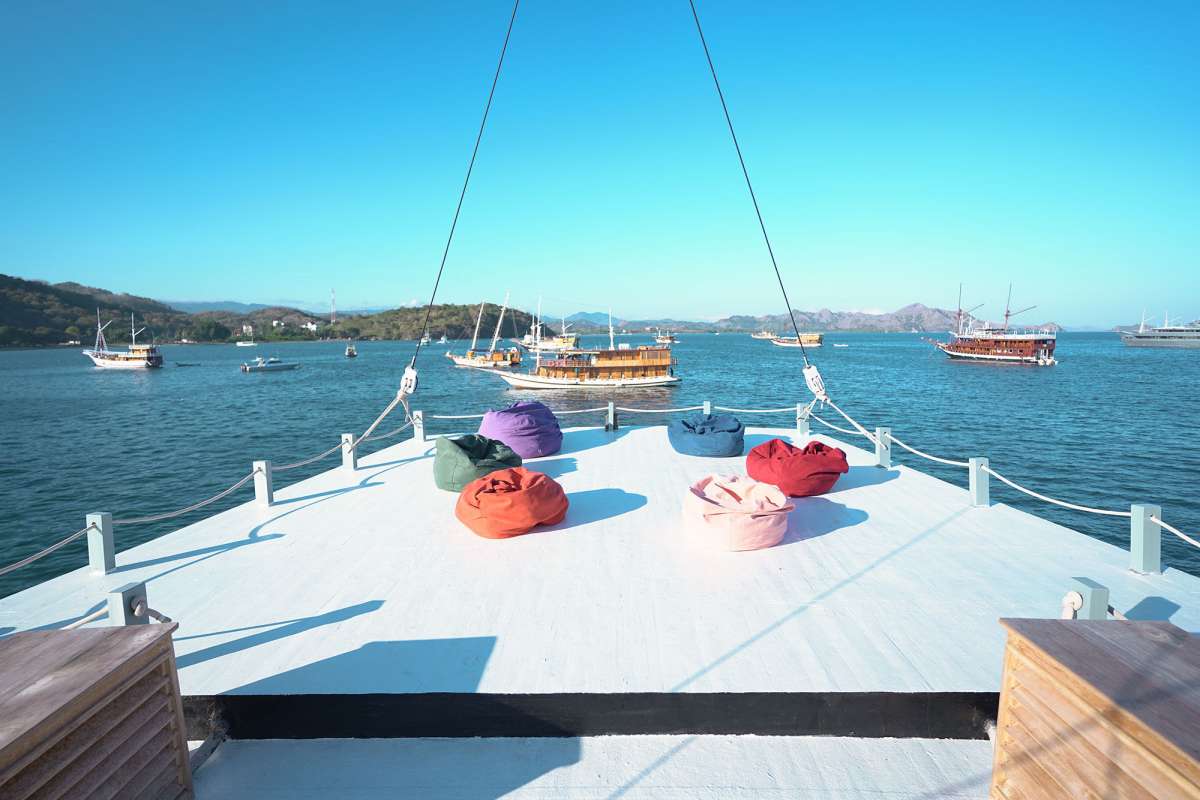
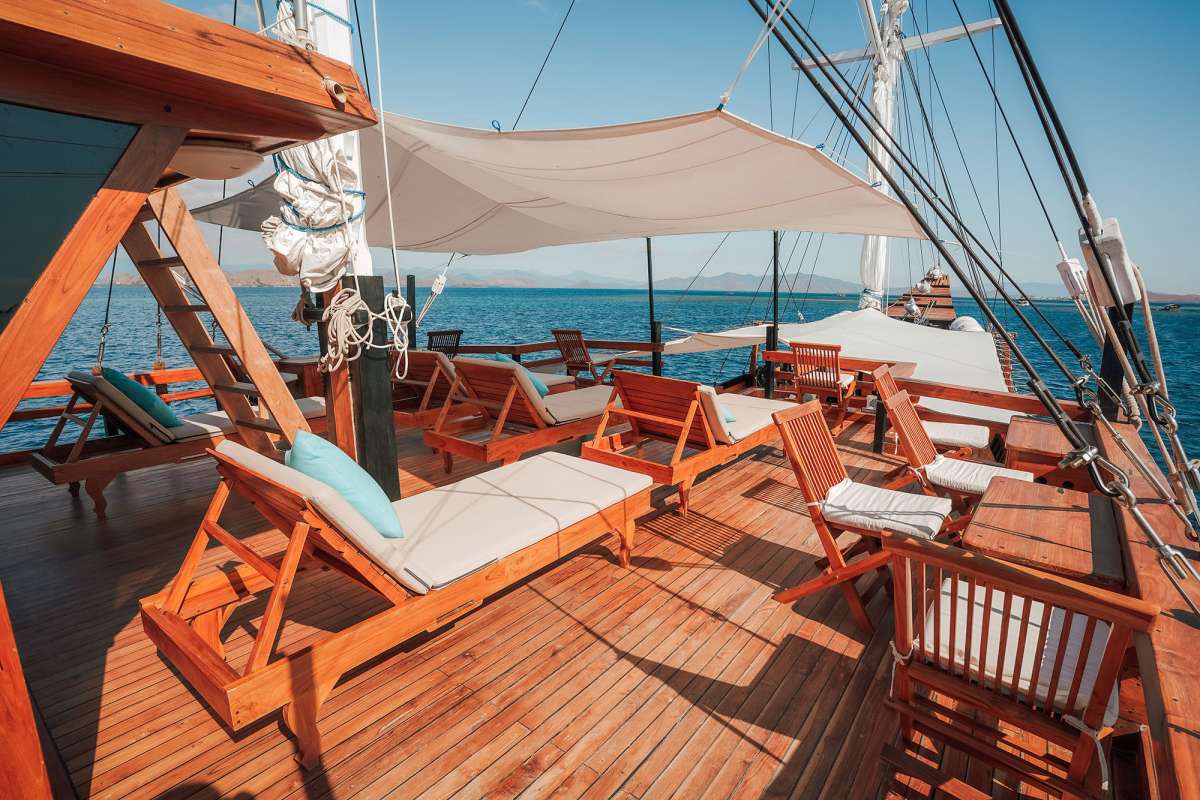
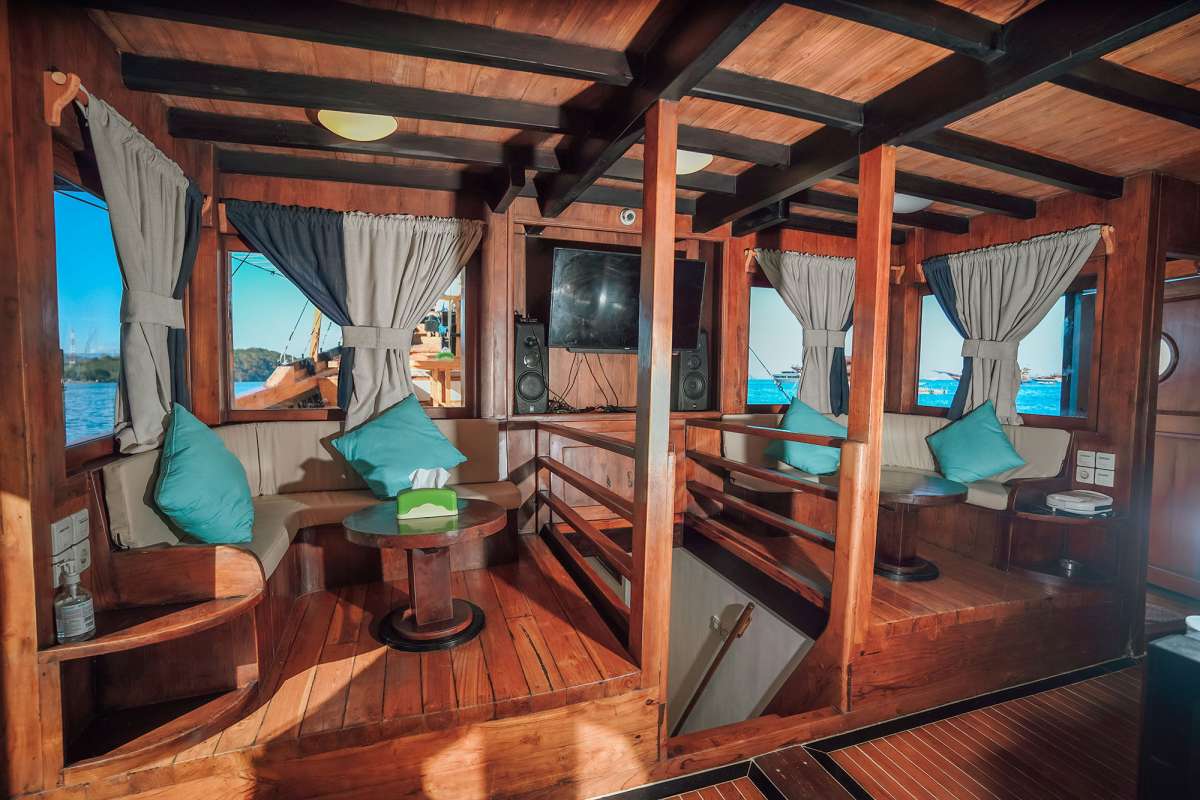
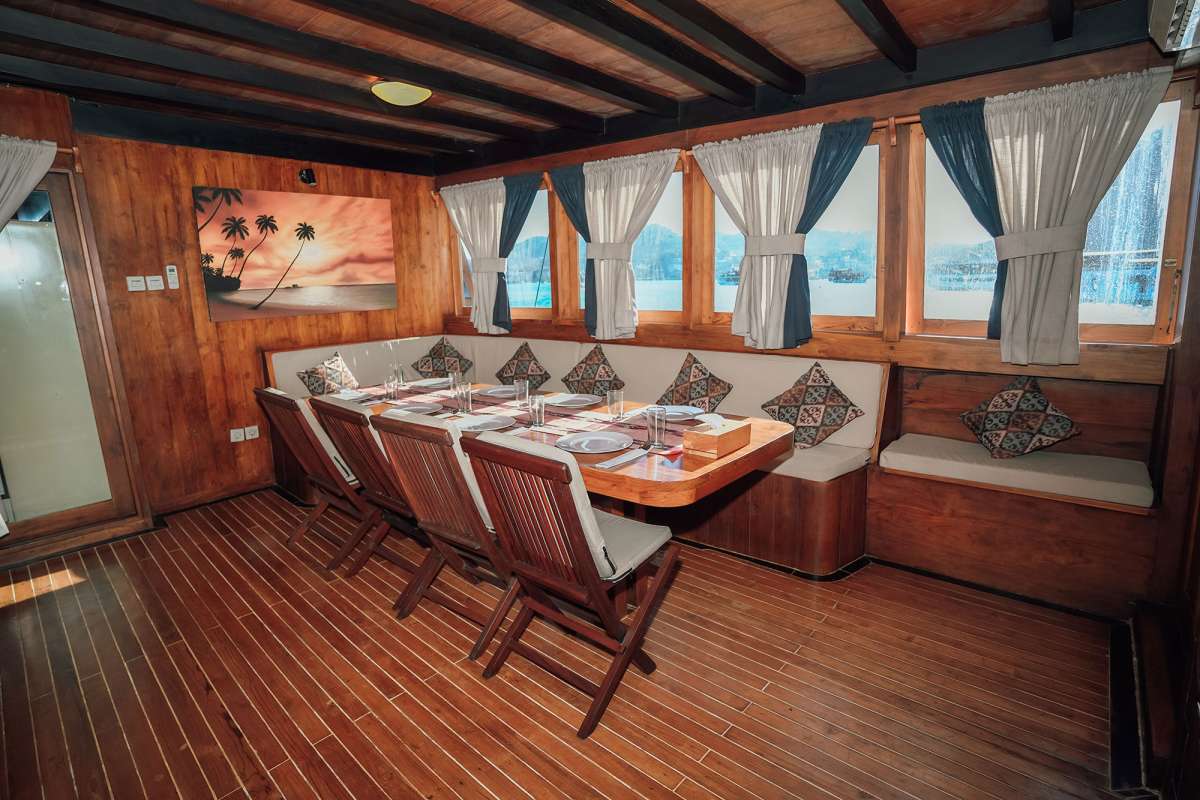
The deck layout separates active diving from rest. A forward leisure deck and broad upper sun deck provide open space for beanbags and loungers, while shaded exterior seating and dining areas allow guests to remain outside without full tropical sun. Indoors, a timber salon and restaurant provide air-conditioned alternatives for meals, camera review and quiet surface intervals. The vessel also carries a kitchen, guide room, captain's room and separated crew area.
The extended cruising range requires self-contained systems and disciplined scheduling. The operator lists radar, GPS, depth sounder, fish finder, searchlights, satellite telephone and VHF/DSC/SSB radio. Safety equipment includes EPIRB, emergency life rafts, fire alarm and extinguishers, flares, bilge-pump alarm, engine-room CCTV, medical oxygen and first-aid kits. A current technical record counts nine bathrooms across the vessel, although seven are the private cabin ensuites described below.
Meals are organised around diving and passage times. Current package records include breakfast, lunch, dinner, snacks, mineral or drinking water, tea and coffee. Menus combine Indonesian and Western food, and vegetarian or medically necessary dietary needs should be supplied early enough for remote provisioning. The indoor restaurant and open-air tables give the crew flexibility according to weather. Soft drinks and alcoholic beverages are currently listed as extra.
Queenesia II is suitable for non-divers on selected routes because snorkelling, island visits, beaches, viewpoints and wildlife excursions are published alongside scuba diving. However, a non-diver should verify the amount of dedicated guide support and whether each planned site offers safe snorkelling. A tender drop in a strong channel is not automatically transferable to a surface activity.
Cabin
The operator publishes exactly seven air-conditioned cabins with private ensuite bathrooms and charging ports. The current cabin-by-cabin inventory is:
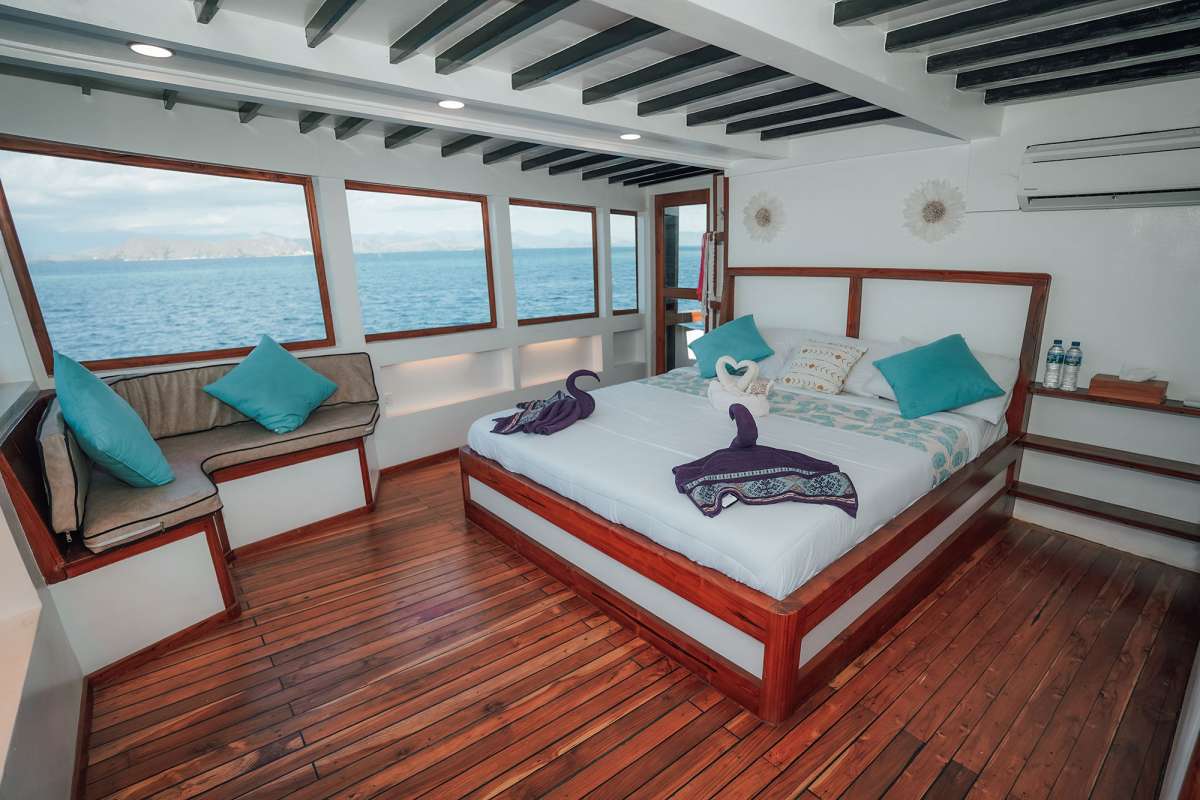
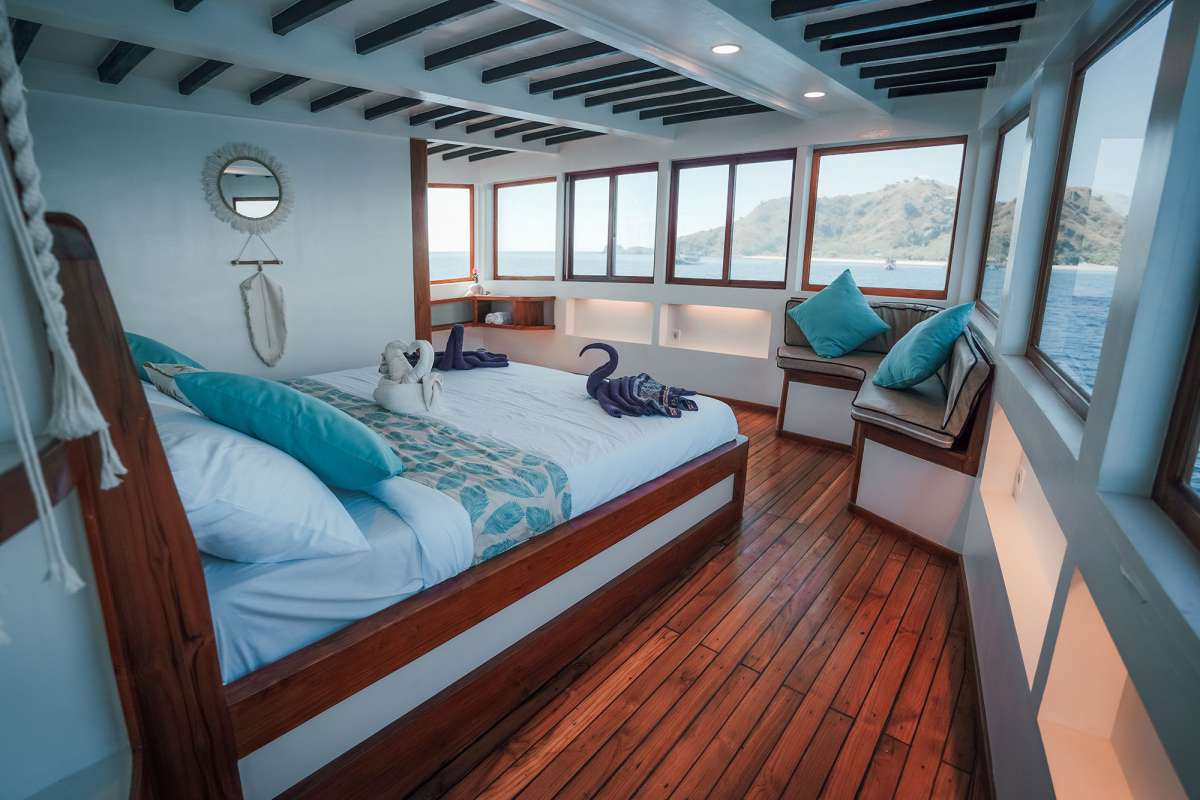
- 1 Master Cabin — upper deck: one double bed, large panoramic windows, maximum 2 guests, private ensuite bathroom, individual air-conditioning unit and charging ports; sold as non-sharing
- 1 Sea View Cabin — main deck: one double bed, broad sea-view windows, maximum 2 guests, private ensuite bathroom, individual air-conditioning unit and charging ports; sold as non-sharing
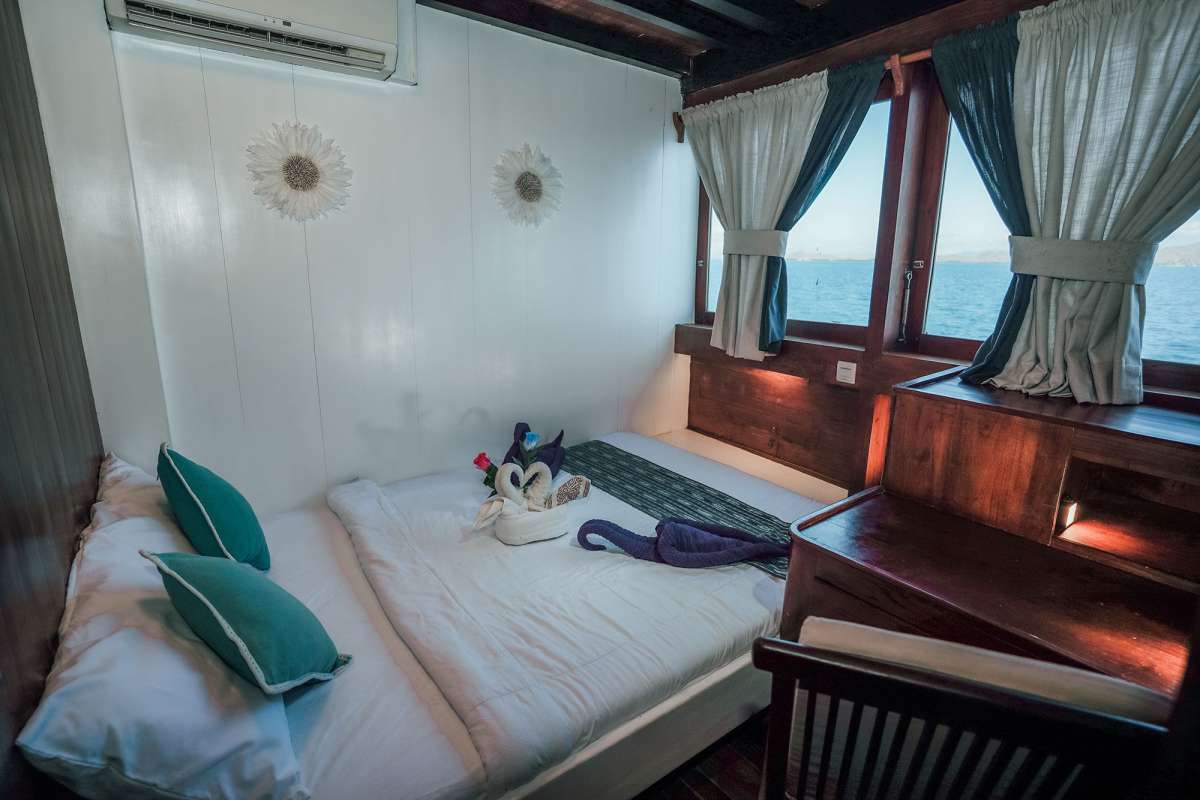
- 3 Double Cabins — lower deck: one double bed in each room, maximum 2 guests per cabin, private ensuite bathroom, individual air-conditioning unit and charging ports; sold as non-sharing
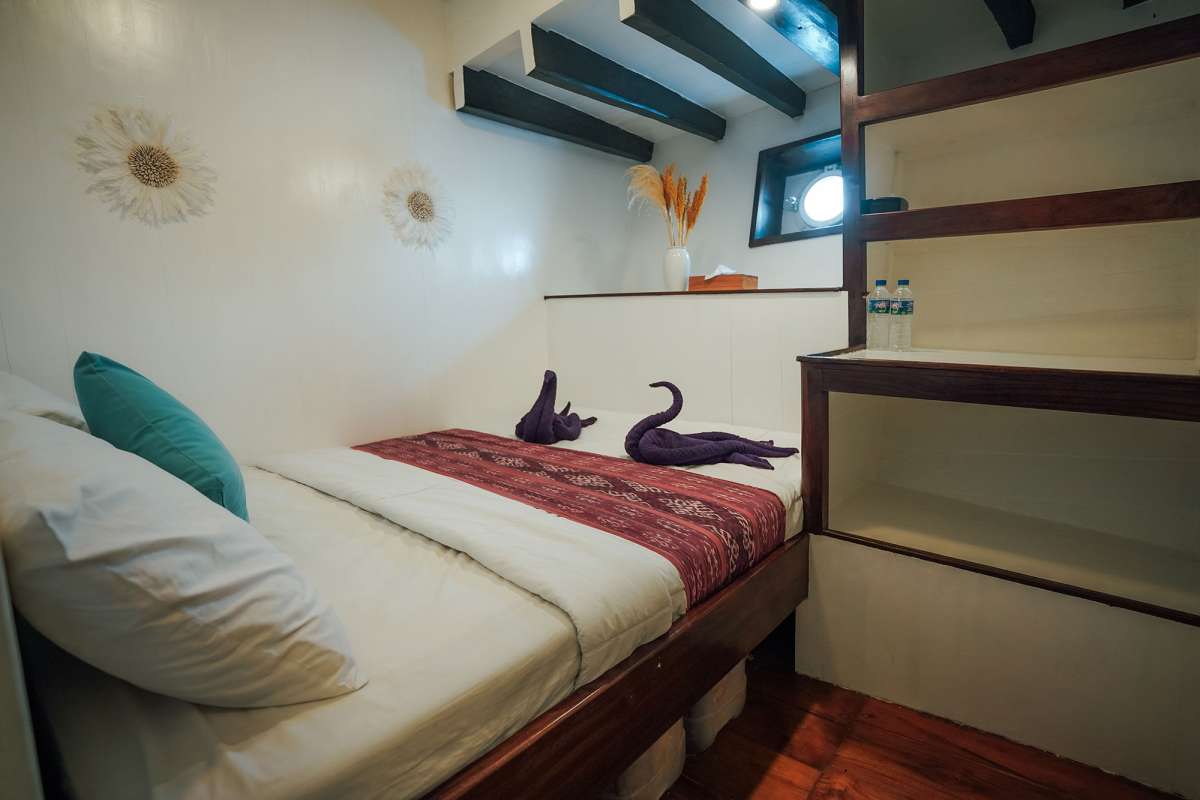
- 2 Triple Cabins — lower deck: one double bed plus one separate single bed in each room, maximum 3 guests per cabin, private ensuite bathroom, individual air-conditioning unit and charging ports; operator lists them as non-sharing cabin units suited to families or small private groups
The physical bed arithmetic is 1 × 2 + 1 × 2 + 3 × 2 + 2 × 3 = 16 berths across 7 cabins. However, Queenesia Fleet's current homepage markets Queenesia II as a 14-passenger phinisi, and the current DiveBooker technical record also states capacity 14. Other current records—including the operator's own per-cabin maximums, LiveAboard.com and PADI Travel—state up to 16.
For accurate sales copy, 14 should be treated as the standard published operating capacity, with 16 used only when the operator confirms in writing that both single beds in the Triple Cabins are released for that departure. The extra two physical berths do not create an eighth cabin and should not be sold automatically. The final rooming list must identify each triple-occupancy approval, passenger age and bed allocation.
The deck position affects the experience. The Master gives elevated outlook and the largest panoramic glazing; the Sea View keeps its double bed on the main accommodation level close to shared spaces; the five lower-deck rooms provide more limited windows and may transmit more machinery or water noise. All categories are photographed with simple white interiors, dark timber accents, individual cooling and compact ensuite wet rooms.
No published category offers two fully separate floor-level twin beds. The Triple's separate single is elevated in the photographed configuration, while the three standard lower rooms are described by the operator as doubles. Some reseller pages use legacy labels such as “twin/double” or show an incomplete six-category inventory; those variants do not reconcile with the operator's exact seven-room list and should not replace it.
Towels and toiletries are currently included. Cabin sizes are not consistently published, and room-specific storage, hairdryer, safe and housekeeping frequency should be confirmed rather than assumed. Guests who require single occupancy, a particular deck, step-free access or a non-bunk third bed should obtain the cabin number and written layout before payment.
Diving
Queenesia II's dive operation is designed for multi-region itineraries rather than one fixed park. The vessel carries aluminium 12-litre cylinders, two compressors, DIN adaptors, underwater dive lights, assorted equipment and tender support. Current seller records describe a maximum guide-to-diver ratio near 1:4, a shaded dive area, charging station or camera workspace, separate camera rinse and outside showers. Rental gear is available for a surcharge.
Published tender counts conflict: the operator equipment list and DiveBooker say one diving tender, while LiveAboard.com's current technical table counts two. The boat should therefore be marketed as offering tender-supported diving, not “two-tender operation,” unless the departure confirmation names both craft. The same caution applies to guest capacity.
The standard listed gas is compressed air. PADI Travel and DiveBooker currently label Nitrox unavailable, and Wi-Fi is also listed as unavailable. Some historical guest material mentions Nitrox on particular voyages, but it is not safe to promise it as a regular service. A Nitrox-dependent diver should obtain written confirmation of availability, price, analyser procedures and fill schedule before booking.
Dive counts depend on route length. Current examples include roughly 14–15 dives on a 7-day / 6-night Banda Sea program, 17–18 on 8 days / 7 nights, about 18 dives on a 7-night Raja Ampat program and approximately 21 on an 8-night option. Komodo's 6-day / 5-night program is published with 15–16. Crossing days, land excursions and the final no-fly window reduce the number of entries.
A current detailed record states Advanced Open Water or equivalent and at least 50 logged dives for its major safaris. That is reasonable for strong current, negative entries, deep pinnacles, blue-water ascents and remote emergency response, but the signed requirements for the chosen departure are decisive. Derawan includes accessible reefs as well as the demanding channel at Maratua; Raja Ampat combines sheltered macro sites with fast Dampier passages; Banda Sea crossings add isolation and open-ocean swell; Komodo can shift dramatically with tide and season.
Guides may split groups by experience, air consumption and photographic pace. A private cabin or higher category does not buy a private guide. Divers should travel with a computer, DSMB, suitable exposure protection, current insurance and recent skills. Wildlife—manta rays, schooling hammerheads, reef sharks, turtles, barracuda, trevally, whales and rare macro subjects—is never guaranteed.
Other Information
- Destinations: Raja Ampat, Misool, Banda Sea, Ambon, Derawan, North Sulawesi and Komodo according to season
- Typical ports: Sorong, Ambon, Berau, Bitung and Labuan Bajo; crossings can use different start and finish ports
- Vessel: Ironwood Buginese phinisi schooner, built 2016 and reported refurbished 2022
- Dimensions: 32 m × 7.5 m
- Cabins: 7 private ensuite cabins
- Capacity: 14 standard published operating guests; physical category maximum 16 only with written confirmation
- Bathrooms: 9 published vessel-wide, including 7 cabin ensuites
- Cruising speed: 7–8 knots
- Compressors: 2
- Standard tanks: 12 L aluminium
- Dive groups: approximately 1 guide to 4 divers in current sales material
- Nitrox: Not currently advertised as a regular service
- Wi-Fi: Not available in current technical listings
- Languages: English listed for crew
- Payments: Current PADI listing accepts cash in USD, EUR and local currency; departure instructions prevail
Currently included in the detailed package: accommodation and scheduled dives; local airport and hotel transfer linked to the published embarkation; standard tank and weights in the fuller package description; breakfast, lunch, dinner, snacks, mineral/drinking water, tea and coffee; eligible night dives; listed land excursions; naturalist and snorkelling guide service; cabin, beach and deck towels; basic toiletries; and VAT where expressly stated. A reseller offers short-term DAN cover on request, but this should be treated as an optional seller benefit, not comprehensive travel insurance.
Normally excluded or charged separately: national-park and port fees; dragon trek and ranger fees on Komodo programs; BCD, regulator, wetsuit, fins, mask, computer and other rental gear; underwater camera; soft drinks and alcoholic beverages; Nitrox if exceptionally available; domestic airport tax where applicable; gratuities; private guide or special transfer requests; flights, pre/post hotels, laundry and personal purchases; travel, medical and dive-accident insurance.
Cabins & prices
| Name | Price |
|---|---|
| Lower Deck Double Cabin | $2,800.00 |
| Lower Deck Twin Cabin | $2,800.00 |
| Lower Deck Twin/Double Cabin | $2,800.00 |
| Main Deck Sea View Double Cabin | $3,200.00 |
| Upper Deck Master Cabin | $3,600.00 |
Included
- Transfers from airport and/or hotel to the yacht
- Full-board meal plan (including snacks)
- Complimentary beverages (water, tea, coffee)
- Diving activity (incl. tanks, weights, weight belts)
- Dive guide service
- Land excursions and activities throughout the trip
- Cabin towels and complimentary toiletries
- Cabin cleaning service
Not included
- Domestic flights in destination country
- Marine park fees & Port fees
- Fuel surcharge
- Alcoholic beverage
- Soft drinks
- Dive equipment rentals
- Larger tank (15 L)
- Dive courses on board
- Dive insurance (mandatory requirement)
- Travel insurance (trip cancellation insurance)
- Crew gratuity
More
| Destinations | Alor, Komodo, Banda Sea, Raja Ampat, Sulawesi, Derawan Islands |
|---|---|
| Facilities | Sidemount Friendly, Tech Friendly |
| Languages spoken | English |
Photos