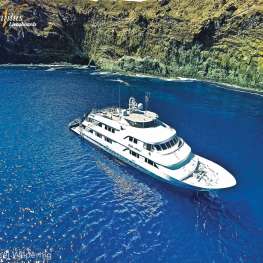
On the Pacific coast of Baja California Sur, roughly halfway between Cabo San Lucas and the 28th parallel, a vast lagoon system stretches along the coast for nearly 200 kilometres, sheltered from the open Pacific by a chain of barrier islands and sand spits. Magdalena Bay — Bahía Magdalena — is one of the largest coastal lagoon systems in North America, and for two to three months every winter it becomes something else entirely: one of the most important gray whale breeding and nursery grounds on earth.
Every autumn, in the Pacific Ocean off the western coast of Baja California Sur, one of the ocean's most intense and least-known wildlife events unfolds a few miles offshore from the sheltered waters of Magdalena Bay. Enormous schools of sardines gather in the open Pacific, driven by the cooling water temperatures and the upwelling currents of the eastern Pacific. What follows is a feeding spectacle of extraordinary scale and energy: thousands of striped marlin — the fastest billfish in the ocean — converge on the sardine mass alongside California sea lions, Bryde's whales, humpback whales, dolphins, and clouds of frigatebirds and boobies working from above, compressing the sardines into massive, desperate bait balls that churn at the surface in a display of predator-prey drama available nowhere else in the Pacific.
The Magdalena Bay sardine run is sometimes called Mexico's answer to the South Africa sardine run — and the comparison is instructive even where it falls short. South Africa's event is defined by its sharks; Magdalena Bay's is defined by its marlin. Thirty, fifty, sometimes more than a hundred striped marlin working a single bait ball simultaneously — their bills flashing, their bodies iridescent blue and bronze in the clear Pacific light as they slash through the sardine mass at speed — is a sight that experienced underwater photographers and wildlife divers consistently describe as among the most visually intense they have ever witnessed.
The encounter format is snorkel and freedive, not scuba. The bait balls form at or near the surface in relatively shallow water, making them fully accessible to snorkellers — and the absence of scuba bubbles makes surface encounters significantly less intrusive for the animals than a scuba approach would be. This is a water-entry, fast-paced, open-ocean experience: guests launch from pangas, enter the water at the edge of active bait balls, and immerse themselves in one of the most kinetic marine wildlife events on the planet.
Sardine Run Season
The mechanics of the Magdalena Bay sardine run follow a pattern that experienced operators and guides have learned to read over years of working the season. The sardines gather in the open Pacific several kilometres offshore from Magdalena Bay's barrier islands, drawn by the cold, nutrient-rich water that the autumn upwelling delivers. Their aggregation, in turn, draws the predators.
Striped marlin (Kajikia audax) are the defining species. These are large, fast, spectacular fish — adults commonly reach 2.5 to 3.5 metres — and during the sardine run they exhibit cooperative hunting behaviour in which multiple individuals work together to corral and compress sardine schools into bait balls. A marlin attacking a bait ball is a display of pure athleticism: a blurred streak at 50 kilometres per hour, the bill used to stun sardines individually before the fish circles and consumes them. When thirty or fifty marlin are working a single bait ball simultaneously, the water around the diver or snorkeller becomes a kinetic field of fins, bills, and silver sardine bodies that defies any prior frame of reference.
California sea lions join the marlin at the bait balls, pursuing sardines with their own agility and apparent enjoyment. The sea lions seem genuinely playful in the feeding context — young animals in particular approach and interact with snorkellers, creating the kind of close, characterful marine mammal encounter that the Sea of Cortez is also famous for.
Bryde's whales (Balaenoptera edeni) are regular and large-scale participants — these are not small animals (adults reach 13 metres) and their lunge-feeding behaviour through the bait balls creates dramatic moments in which the whale's entire rostrum breaks the surface at speed, engulfing thousands of sardines in a single pass. Humpback whales are also present during the sardine run season and may participate in the bait ball feeding directly.
Frigatebirds, brown boobies, pelicans, and gulls work from above, plunging into the sardine mass from the air and providing one of the most reliable visual indicators for locating active bait balls. The birds are often spotted before the underwater action from the deck of the liveaboard — their massed, low-circling presence marking the location of a productive ball from a kilometre or more away.
Silky sharks and occasionally mako sharks and blue sharks are present at the edges and beneath the bait balls, typically more deliberate and less frenetic in their approach than the marlin and sea lions. Mahi-mahi (dorado), yellowfin tuna, and bonito join the feeding in most productive years. Orcas are occasional and spectacular visitors — pods of killer whales have been recorded hunting at Magdalena Bay bait balls, typically targeting sea lions or large fish rather than sardines directly.
The bait balls themselves are dynamic structures. A static bait ball — one in which the sardines have compressed into a dense, slowly rotating sphere — can persist for extended periods, allowing snorkellers to enter and remain in the water for twenty to forty minutes of sustained close encounter with the feeding activity. Moving bait balls, driven by the marlin herding them toward the surface, are faster and more chaotic but often produce the most intense images and experiences. The daily rhythm at Magdalena Bay involves locating and working bait balls through the morning and early afternoon hours, with the most consistent activity typically in the earlier part of the day.
The Encounter: Snorkelling vs. Freediving vs. Scuba
The Magdalena Bay sardine run is not a scuba diving experience. The bait balls form at the surface in shallow, open-Pacific conditions, and the encounter methodology is snorkel and freedive.
This is not a limitation. Scuba diving at an active bait ball is impractical — the bubbles disturb the sardines and alter the predator behaviour, the depth requirement of scuba equipment reduces mobility and speed, and the buoyancy challenges of staying in the zone of a moving bait ball in open-ocean conditions are significant. Snorkellers and freedivers can enter and exit the water rapidly from the panga, position themselves at the edge of active bait balls with minimal disturbance, and move with the ball as it travels or disperses.
For snorkellers, the experience is fully accessible — a mask, fins, and a 3mm to 5mm wetsuit are the only equipment requirements. No scuba certification is required for freediving or snorkelling. Comfort in blue-water, open-ocean conditions — some swell, some surge, clear water with depth visible below — is the primary physical requirement.
For freedivers, the sardine run offers a genuinely exceptional environment for practising open-water breath-hold diving in close proximity to large, active predators. The ability to dive below the bait ball and look upward at the silhouettes of marlin and sea lions attacking from above, framed against the silver mass of sardines and the surface light, produces images and experiences that surface snorkelling cannot replicate.
Scuba divers can dive the Magdalena Bay reefs and inner bay sites on days when bait ball conditions are less productive, or on the warm-up day at the beginning of the itinerary. Some operators incorporate a small amount of scuba diving into the programme alongside the primary sardine run focus.
Marine Life
The Magdalena Bay sardine run aggregates a multi-species predator community that varies somewhat from year to year based on conditions but consistently includes the following:
Striped marlin (Kajikia audax) are the headline species — present in the hundreds to thousands during productive weeks, their cooperative hunting of bait balls the defining encounter of the event. California sea lions bring energy and playfulness to every bait ball interaction. Bryde's whales and humpback whales participate directly in bait ball feeding with their lunge-feeding behaviour. Bottlenose and common dolphins join the feeding in coordinated groups.
Silky sharks patrol the bait ball edges. Mako sharks and blue sharks are present in some seasons. Orcas make irregular but dramatic appearances. Mahi-mahi, yellowfin tuna, and bonito complete the predator suite. Mobula rays — the spinning, leaping devil rays of the Pacific — are present in large aggregations in the Magdalena Bay area during the sardine run season, and their surface displays (leaping clear of the water and slapping back in) are a spectacular above-water spectacle from the liveaboard deck.
Mola mola (ocean sunfish) are regularly sighted in the Magdalena Bay area during the sardine run season, sunning at the surface in the open Pacific approaches to the bay. Green sea turtles and loggerhead turtles are present in the inner bay. Elephant seals are occasionally encountered on the outer barrier island beaches.
Best Time and Season
The Magdalena Bay sardine run runs from October through December, with the peak of sardine concentration and marlin activity typically in October and November. Specific timing varies year to year depending on water temperature and oceanographic conditions.
October marks the beginning of the season as water temperatures cool and sardines begin aggregating. Early October can be productive but activity builds through the month. Water temperatures are at their warmest for the season (24°C to 27°C) and visibility is typically excellent.
November is widely considered the peak month — the combination of sardine concentration, marlin numbers, and the full suite of supporting predators (whales, sea lions, sharks) is most reliably present. Most dedicated liveaboard operators focus their itineraries in this window.
December sees the season winding down as conditions shift toward the gray whale season. Some years December produces excellent sardine run activity; in others the event has largely passed by mid-December. Water temperatures have dropped (20°C to 23°C) and some operators have transitioned toward gray whale itineraries by late December.
The sardine run does not occur in isolation: the same months bring humpback whales to the Magdalena Bay area and the transition to the gray whale calving season in January creates an extraordinary seasonal overlap in late November and December when both the sardine run predator community and the first gray whale arrivals may be present simultaneously.
Water Temperature, Visibility, and Conditions
Water temperatures during the sardine run season range from 24°C to 27°C in October dropping to 20°C to 23°C by December. A 5mm wetsuit with a hooded vest is recommended for November and December; a 3mm is adequate for October for most guests.
Visibility in the open Pacific zone where the bait balls form is typically very good — 20 to 30 metres is standard, and some conditions produce better. This is open-ocean, blue-water visibility above a Pacific upwelling environment, and the clarity allows unobstructed views of marlin attacks from 10 to 15 metres distance.
Conditions in the open Pacific can involve swell and surface chop. The bait ball zone is several kilometres offshore in open water, and some days are calmer than others. The pangas used for bait ball access are seaworthy working boats designed for these conditions, but guests should be physically comfortable in open-ocean surface conditions and prepared for a dynamic, physically engaging experience. The liveaboard is anchored in the sheltered inner bay waters and conditions on the vessel itself are generally comfortable.
Practical Information
Magdalena Bay sardine run liveaboards depart from Cabo San Lucas — served by Los Cabos International Airport (SJD) with direct connections from numerous US and Canadian cities and connections from Mexico City. The overnight sail from Cabo to Magdalena Bay takes approximately 15 hours.
Standard sardine run itineraries run 7 nights with 4 to 5 full days of sardine run operations. The maximum vessel capacity on most dedicated sardine run liveaboards is 12 guests. No scuba certification is required for snorkel and freedive participation. Scuba certification (Open Water minimum) is required for any reef diving component. A 3mm to 5mm wetsuit is required; mask, fins, and snorkel are essential equipment.
Dive and evacuation insurance is mandatory on most sardine run liveaboard operations. The open-ocean conditions and the remote location of the Magdalena Bay area relative to major medical facilities make this a genuine rather than pro forma requirement.
Browse Magdalena Bay liveaboards on Dive and Cruise
Frequently Asked Questions
How does the Magdalena Bay sardine run compare to South Africa's?
They are complementary rather than competing experiences with distinct characters. South Africa's event is shark-dominated — bronze whalers, duskies, blacktips, occasionally hammerheads — in colder, often lower-visibility water. Magdalena Bay's event is marlin-dominated, in warmer, clearer Pacific water, with Bryde's whales and California sea lions as the other major participants. The South Africa event is more cinematically famous; Magdalena Bay is less visited, more accessible logistically, and arguably more visually dramatic in the open-water snorkel context due to the water clarity and the spectacle of the marlin themselves. For divers who have done the South Africa sardine run and want its Mexican equivalent — or who want a warm-water, high-visibility bait ball experience that doesn't require a Cape winter — Magdalena Bay is the answer.
Do I need to be a strong swimmer or experienced diver?
Strong, comfortable swimming in open water is required — this is a blue-water, open-ocean experience with some swell and current. Scuba certification is not required for the sardine run encounters, but prior snorkelling experience and comfort in open-ocean conditions are important. The pangas position guests at the edge of bait balls and the entry and exit are from the water at sea, not from a beach or a pier. Guests who have snorkelled in open water before and are physically fit will manage the conditions well. Guests who are not comfortable in open water without a solid surface to stand on should consider whether the experience is appropriate for them.
Is the sardine run guaranteed?
No wildlife event is guaranteed, and the sardine run is subject to the oceanographic variability that governs the behaviour of the sardine aggregation — water temperature fluctuations, interannual variability in the upwelling system, and the movement of predator populations. Most experienced operators report that in the majority of years and most weeks within the October-November peak season, productive bait ball activity is encountered. The few operators who have run Magdalena Bay sardine run itineraries for ten or more years consistently report high success rates in finding and working bait balls during peak season. November is the most consistently productive month across multiple seasons.
Part of Americas & Caribbean · Browse Magdalena Bay Sardine Run liveaboards on Dive and Cruise