The North Maldives, spanning atolls such as Baa atoll, Raa atoll, Lhaviyani atoll, Noonu atoll, Shaviyani atoll, Haa Dhaalu atoll, Haa Alifu atoll, is a world-class diving destination known for its clear turquoise waters, vibrant coral reefs, and incredible marine biodiversity. This region is ideal for divers seeking both thrilling encounters with large pelagics and peaceful exploration of pristine reef gardens.
Diving in the North Maldives varies from drift dives along spectacular channels to gentle reef dives suitable for all levels. Strong currents bring rich nutrients, attracting manta rays, reef sharks, schools of snappers, fusiliers, and jacks. Cleaning stations along the channels offer close-up encounters with manta rays and occasionally whale sharks. In addition, the reefs are teeming with colorful soft corals, nudibranchs, moray eels, and countless reef fish, making this area perfect for both macro and wide-angle photography.
The climate is tropical, with warm waters year-round. Water temperatures average 27–30°C (80–86°F), while air temperatures range from 28–32°C, with the dry northeast monsoon season from December to April offering calm seas and excellent visibility, and the wetter southwest monsoon from May to November providing nutrient-rich waters that increase sightings of large pelagics.
Each atoll has its own unique diving character. Baa Atoll, a UNESCO Biosphere Reserve, is famous for its manta ray cleaning stations and vibrant reefs. Lhaviyani and Noonu Atolls offer stunning channels and drop-offs frequented by reef sharks, eagle rays, and schools of giant trevally. Raa and Shaviyani Atolls feature remote reefs and less-visited sites, ideal for divers seeking tranquility and abundant reef life. The northernmost atolls, Haa Dhaalu and Haa Alifu, are known for strong currents, thrilling drift dives, and occasional encounters with whale sharks, hammerheads, and large pelagics.
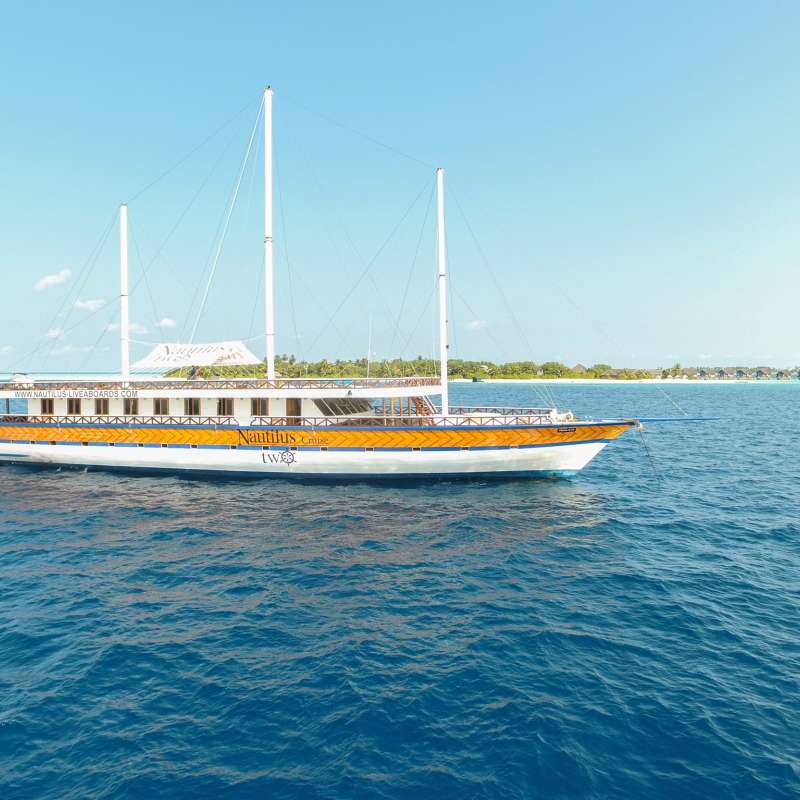
Above water, the North Maldives is equally stunning, with white sandy beaches, coconut palms, and remote island resorts. Most divers explore this region via liveaboards, which allow access to the most pristine and remote dive sites across multiple atolls in a single journey.
Liveaboard Diving Regions :
Baa Atoll
A UNESCO Biosphere Reserve, Baa Atoll is famous for manta ray cleaning stations, rich coral gardens, and vibrant channels. Divers can encounter manta rays year-round, with peak sightings from May to November during the southwest monsoon. Reef sharks, eagle rays, and schools of colorful tropical fish are abundant, making it ideal for both macro and wide-angle photography.
Lhaviyani and Noonu Atolls
These central northern atolls feature stunning channel dives, drop-offs, and soft coral gardens. Divers can expect to see reef sharks, giant trevally, napoleon wrasse, and eagle rays. Currents vary, offering challenging drift dives for experienced divers and calm reef dives for intermediates. Diving is excellent year-round, with best visibility from December to April.
Raa and Shaviyani Atolls
Less-visited and remote, these atolls provide pristine reef systems and secluded dive sites. Divers can enjoy abundant reef fish, colorful soft corals, and occasional encounters with reef sharks and eagle rays. Currents are mild to moderate, making it suitable for all experience levels. Peak marine life activity occurs during the southwest monsoon (May–November).
Haa Dhaalu and Haa Alifu Atolls
The northernmost atolls are known for thrilling drift dives, strong currents, and large pelagic sightings. Hammerhead sharks, whale sharks, and schools of jacks are common in this nutrient-rich area. This region is best suited for experienced divers seeking adventure, with diving conditions peaking between May and November.