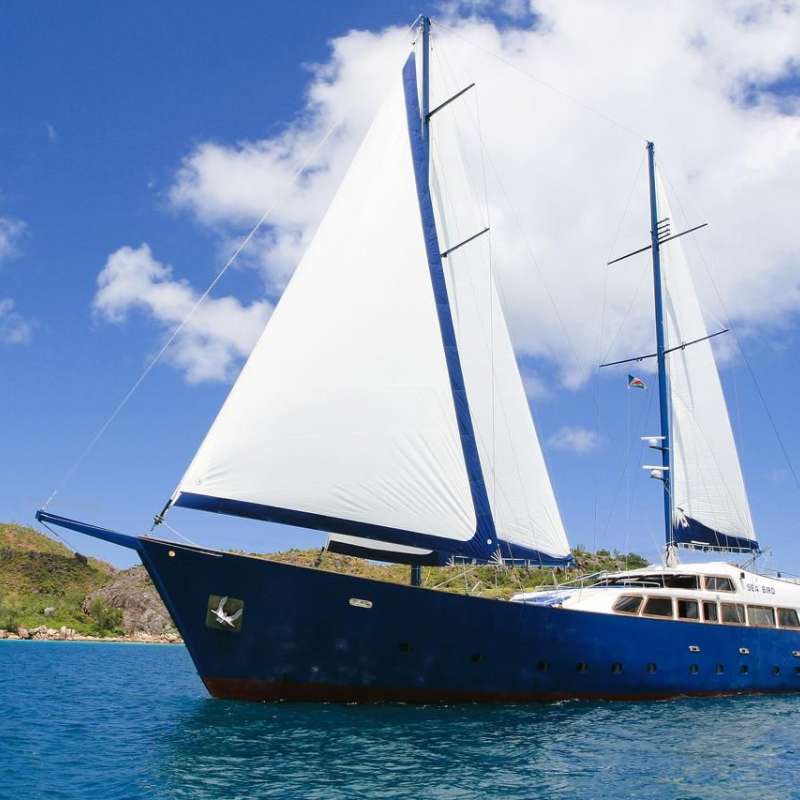
Seychelles is an Indian Ocean paradise made up of 115 islands, scattered over 1.3 million square kilometers of crystal-clear waters. The islands are famed for their granite boulder beaches, lush tropical forests, and vibrant coral reefs. For divers, Seychelles offers a mix of pristine reefs, walls, and wrecks with warm, clear waters, making it a true tropical diving haven.
Diving in Seychelles ranges from gentle reef exploration suitable for beginners to exciting drift dives for more experienced divers. The islands’ coral reefs are home to reef sharks, rays, turtles, and a kaleidoscope of tropical fish. Some sites feature dramatic granite walls, pinnacles, and small caverns, while others are ideal for spotting macro life such as nudibranchs and crustaceans. Wrecks like the Mogma and Ennerdale add variety for adventurous divers seeking history beneath the waves.
Seychelles enjoys a warm tropical climate year-round, with water temperatures between 26–29°C (79–84°F) and air temperatures averaging 24–32°C (75–90°F). Currents are generally mild but can be stronger on outer islands, so divers of all levels can find suitable sites. The best visibility is usually between April and October, during the southeast trade winds, while November to March brings calmer seas, warmer water, and occasional tropical showers.
Liveaboard Diving Regions :
Inner Islands
The inner islands, including Mahé, Praslin, and La Digue, offer sheltered dive sites with calm conditions and easy accessibility. Reefs are abundant with reef fish, rays, and sea turtles. Granite formations create stunning walls and swim-throughs, perfect for photographers and beginners. Visibility is usually excellent, averaging 15–25 meters.
Outer Islands
Remote outer islands like Alphonse, Desroches, Farquhar, and Cosmoledo provide exhilarating dives for more experienced divers. Currents bring in large pelagic species, including reef sharks, manta rays, eagle rays, and schooling trevally. These islands also boast dramatic coral pinnacles, deep walls, and isolated wrecks. The best season is April–October, when southeast trade winds ensure calm seas and clear waters.
Aldabra Atoll
A UNESCO World Heritage Site, Aldabra is one of the world’s largest coral atolls and a true marine sanctuary. Divers can explore untouched reefs teeming with fish, giant turtles, rays, and sharks. Currents can be strong, so these dives are recommended for advanced divers seeking an adventurous experience.