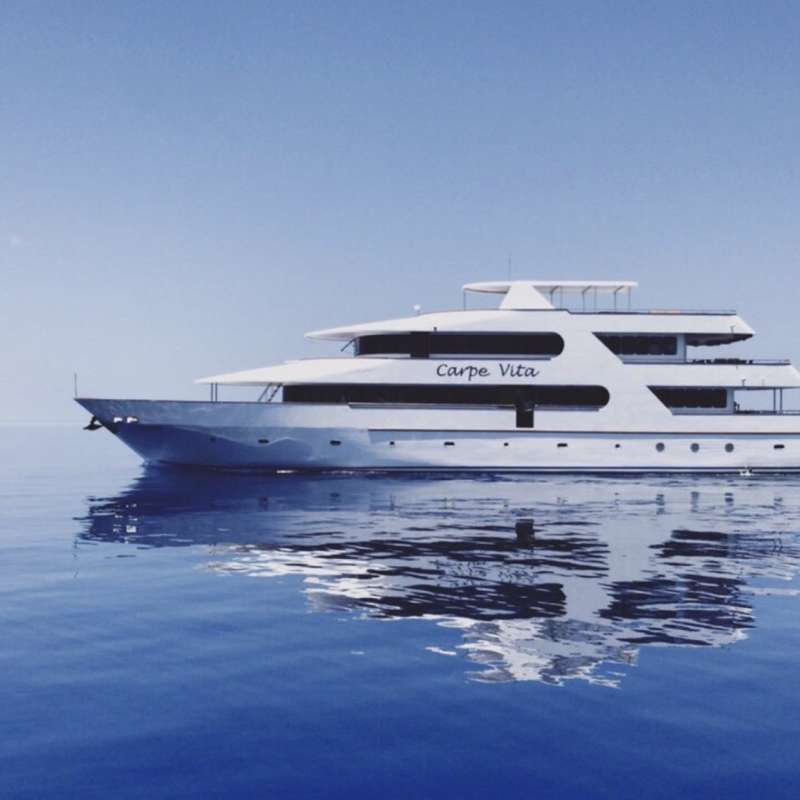
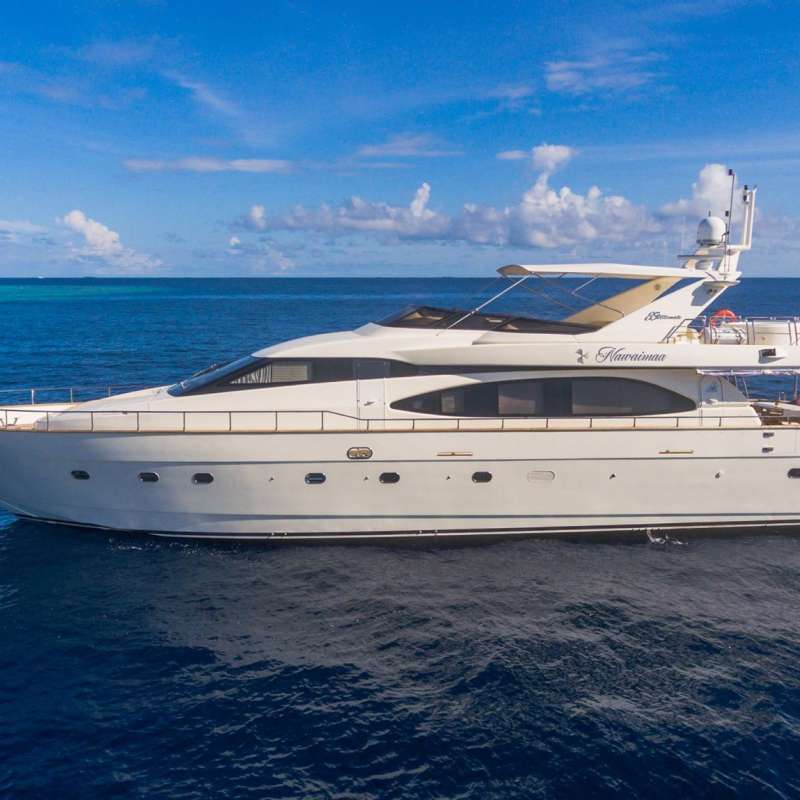
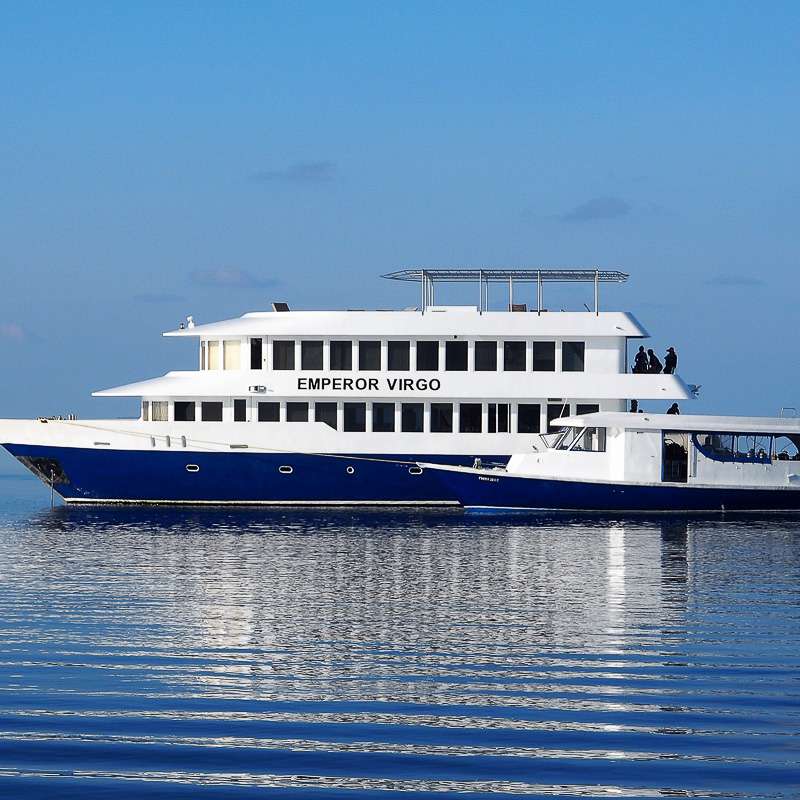
The Maldives is one of the most iconic liveaboard diving destinations on earth — a nation of 1,192 coral islands and sandbars scattered across the central Indian Ocean, where barely one percent of the country's surface area is dry land. Everything else is ocean, and that ocean teems with life. The Maldives sits at the crossroads of major Indian Ocean current systems, and those currents deliver a constant supply of nutrients that sustain an extraordinary food chain — from microscopic plankton all the way up to whale sharks, manta rays, tiger sharks, and hammerheads.
Unlike many dive destinations where the best sites are clustered in a single area, the Maldives stretches more than 800 kilometres from north to south, and each section of this chain has its own distinct character, marine life profile, and optimal season. Liveaboard diving is not just the preferred way to explore the Maldives — it is, for most of the country's best dive sites, the only practical way. The atolls are spread too far apart and too far from inhabited islands for day-trip diving to be meaningful. A liveaboard dhoni safari puts you directly on the sites that matter, moving between atolls overnight while you sleep, and arriving at each dive site fresh and ready at first light.
The Maldives divides naturally into three liveaboard regions: the Central Maldives, the North Maldives, and the South Maldives. Each region delivers a different experience, peaks at a different time of year, and attracts a different mix of marine life — together ensuring that the Maldives offers world-class liveaboard diving in every month of the calendar.
Why Dive the Maldives by Liveaboard
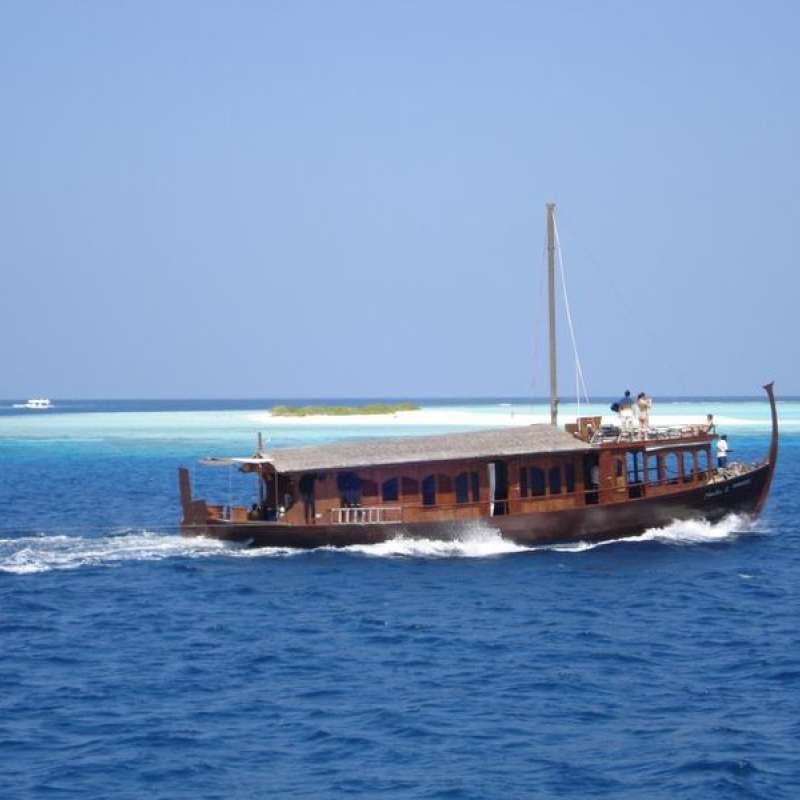
The Maldives liveaboard experience is unlike any other in the world, and much of that comes down to the dhoni — the traditional Maldivian wooden boat that accompanies virtually every liveaboard as a dedicated dive tender. All diving equipment, tanks, and compressors are stored and operated from the dhoni, which pulls alongside the liveaboard when you need it and motors you directly to the dive site while the main boat repositions. This arrangement keeps noise and fumes away from the main vessel, maximises deck space for relaxing, and means that entering and exiting the water from a low, stable platform is effortless for divers of all mobility levels.
Beyond the practical convenience of the dhoni system, a liveaboard in the Maldives grants access to an entirely different tier of diving from what is available on day trips out of Malé or the resort islands. The most productive dive sites — the remote channel drifts, the deep thilas, the shark aggregation points, and the manta cleaning stations — are typically reached only after overnight passages that put a liveaboard in position before dawn. Spending a week or more on the water means your itinerary adapts to the tides and currents rather than to a speedboat schedule, and your dive guides can position you at exactly the right moment on exactly the right site to maximise encounters.
The Maldives also offers one of the widest ranges of liveaboard price points of any destination in the world — from intimate budget dhoni safaris accommodating eight guests to five-star luxury superyachts with onboard spas and private suites — without compromising on the quality of diving available.
The Maldives Dhoni Tender System
One aspect of Maldives liveaboard diving that sets it apart from every other destination is the dhoni — a traditional Maldivian wooden vessel that accompanies the main liveaboard throughout the trip as a dedicated dive tender. All diving equipment, tanks, and compressors are kept on the dhoni, and all dives are conducted from it rather than from the main boat.
This system keeps compressor noise and fumes away from the main living spaces, making the liveaboard quieter and more pleasant to live on. The dhoni's low freeboard makes water entry and exit far easier than from a higher-sided vessel. And the dhoni can position itself precisely over a dive site — often anchoring upcurrent to allow a drift dive that ends exactly at the pick-up point. When comparing Maldives liveaboard options, the size, condition, and equipment of the accompanying dhoni is well worth considering alongside the main vessel itself.
Liveaboard Diving Regions in the Maldives
The Maldives' three main liveaboard regions each suit different times of year and different diver priorities.
Central Maldives
The Central Maldives — encompassing North and South Malé Atolls, North and South Ari Atolls, Vaavu Atoll, and Rasdhoo Atoll — is the most accessible and most varied of the three regions, and the best starting point for first-time Maldives liveaboard divers. All liveaboards on this route embark and disembark directly from Malé, making logistics straightforward, and the region operates year-round, offering flexibility regardless of travel dates.
Diving in the Central Maldives is defined by its extraordinary diversity of site types. Channel drifts through the passes between atolls deliver powerful currents that attract grey reef sharks, eagle rays, Napoleon wrasse, and pelagic species in large numbers. Thilas — submerged coral pinnacles rising from the sandy atoll floor — are carpeted in soft corals and swarming with anthias, and are among the most photogenic dive sites in the entire country. World-famous night dives, historic wreck dives, and cleaning station encounters with manta rays and nurse sharks round out an itinerary that rarely repeats itself across a full week of diving. South Ari Atoll is particularly notable for year-round whale shark encounters — the waters around Dhigurah host one of the most reliable resident whale shark populations in the Indian Ocean. Best season: year-round; December to April for optimal visibility and weather.
North Maldives
Trips to the northern atolls (such as Baa atoll, Raa atoll, Lhaviyani atoll, Noonu atoll) usually can be offered during June to November, while the Far North atolls (such as Shaviyani atoll, Haa Dhaalu atoll, Haa Alifu atoll) can be offered year-round.
The northern atolls — particularly Haa Dhaalu and Haa Alifu Atolls, located up to 770 kilometres from Malé — are among the least dived and most pristine in the entire country. Reaching them requires a short domestic flight from Malé to Hanimaadhoo Airport, where liveaboards embark for itineraries into the far north. The remoteness that makes logistics slightly more involved is exactly what makes the diving so exceptional: sites here see a fraction of the diver traffic of the central atolls, and the reef and fish life reflects that protection.
Diving in the North Maldives is dominated by pinnacle and channel dives where strong currents concentrate enormous numbers of fish — reef sharks, eagle rays, Napoleon wrasse, tuna, barracuda, and trevally are regular sightings. Further north at sites like Baarah Thila, large aggregations of manta rays gather at cleaning stations fed by plankton-rich upwellings.
The north is also home to Hanifaru Bay in Baa Atoll, a UNESCO Biosphere Reserve and the site of one of the world's most spectacular marine wildlife events: the cyclone feeding, during which over 100 manta rays and whale sharks gather simultaneously to feed on dense concentrations of zooplankton. This phenomenon occurs most reliably between June and November, making the North Maldives the ideal destination for divers travelling during the southwest monsoon when central and southern itineraries are at their most variable. Best season: June to November for Hanifaru Bay; year-round for the far northern atolls.
South Maldives
The southern atolls — including Meemu, Thaa, Laamu, Huvadhoo, Fuvamulah, and Addu Atolls — are the most remote and least explored section of the country, and for experienced liveaboard divers, they represent the Maldives at its most wild and productive. Positioned at the southern edge of the atoll chain, these atolls face the open Indian Ocean directly, and the deep water and strong migratory currents that result attract an exceptional density of large pelagic species.
The South Maldives is the best region in the country for shark diversity. Hammerheads can be seen year-round at specific sites in Vaavu Atoll, and as itineraries push further south the species list expands — grey reef sharks, whitetip reef sharks, silvertip sharks, and occasional tiger sharks and oceanic whitetip sharks are all documented in these waters. Whale sharks aggregate regularly around Meemu and Thaa Atolls, while manta ray encounters at cleaning stations in the southern channel systems are among the most reliable in the Maldives. The undeveloped nature of the region means pristine coral cover and reef fish populations that have had significantly less pressure than more accessible areas. Itineraries to the deep south typically run 10 nights or more and often operate as one-way routes using domestic flights at one end to maximise time on the dive sites. Best season: January to April for the best conditions and visibility.
How to Choose Your Maldives Liveaboard Route
With three distinct regions peaking at different times of year, the right Maldives liveaboard depends primarily on when you are travelling and what you most want to encounter underwater.
Divers visiting between December and April will find the Central and South Maldives at their peak — the northeast monsoon brings calm seas, exceptional visibility of 20 to 40 metres, and the strongest shark and pelagic activity of the year. This is the most popular booking window across all price points, and boats fill quickly during January, February, and March.
Divers visiting between June and November will find the North Maldives at its most spectacular. Hanifaru Bay's cyclone feeding events are the standout experience of the entire Maldives diving calendar, and North Maldives itineraries during these months can deliver encounters with mantas and whale sharks in numbers that are impossible at any other time of year.
First-time Maldives liveaboard divers travelling between December and April should begin with the Central Maldives — the combination of easy logistics from Malé, year-round operation, diverse site types, and reliable whale shark encounters in South Ari Atoll makes it the most complete and accessible introduction to Maldivian liveaboard diving.
Experienced divers returning to the Maldives, or those with a specific interest in shark diversity and remote exploration, should consider a longer 10-night itinerary to the South Maldives — the level of pelagic activity and the undisturbed condition of the southern reefs consistently produce the most memorable diving in the country.
Contact our Maldives diving specialists for personalised liveaboard advice
Frequently Asked Questions
When is the best time to dive the Maldives by liveaboard?
The Maldives can be dived year-round, with the best season varying by region. December to April brings the best visibility and calmest conditions to the central and southern atolls, with the highest shark activity of the year. June to November is the prime window for the North Maldives — specifically for Hanifaru Bay's famous manta ray and whale shark cyclone feeding events. The Central Maldives is productive in all months and is the safest year-round choice for first-time visitors.
Do I need advanced diving experience for the Maldives?
The Central Maldives is suitable for Open Water certified divers who are comfortable with drift diving, which is the primary style throughout the country. The South Maldives, with stronger currents and more exposed open-water conditions, is better suited to Advanced Open Water certified divers with previous drift diving experience. The North Maldives sits between the two, with some sites requiring comfort in variable currents.
What is a thila and why is it important for Maldives diving?
A thila is a submerged coral pinnacle that rises from the sandy atoll floor without reaching the surface. Thilas are the signature dive site of the Maldives — they concentrate fish life in extraordinary numbers because the currents flowing around and over them carry nutrients that attract everything from tiny anthias to grey reef sharks and Napoleon wrasse. The best thilas in the Maldives are protected as Marine Protected Areas and are among the most visually spectacular dive sites in the Indian Ocean.
What is Hanifaru Bay, and can liveaboards visit it?
Hanifaru Bay in Baa Atoll is a UNESCO Biosphere Reserve and the site of the most famous marine wildlife spectacle in the Maldives — a cyclone feeding event during which over 100 manta rays and whale sharks congregate simultaneously to feed on dense plankton blooms. It occurs most reliably between June and November. North Maldives liveaboard itineraries during this period typically include a Hanifaru Bay visit. Entry is regulated and snorkelling only — scuba diving is not permitted inside the bay — but the adjacent dive sites offer outstanding manta encounters throughout the season.
Are whale sharks reliably seen in the Maldives?
Yes — the Maldives is one of the world's most consistent destinations for whale shark encounters. South Ari Atoll hosts a well-documented resident population year-round, and liveaboard itineraries covering this area consistently report sightings. Whale sharks are also regularly encountered in the southern atolls and around the North Maldives during the southwest monsoon.
How long should a Maldives liveaboard trip be?
Most Central and North Maldives itineraries run 7 nights, sufficient to explore four to five atolls and complete 16 to 18 dives. South Maldives itineraries are best at 10 nights or more to justify the longer passages and allow meaningful time on the remote southern sites.
Part of Indian Ocean & Red Sea · Browse all Maldives liveaboards